
Solar water heating (or solar thermal) uses sunlight to directly heat the water you’ll then use in your bathroom or kitchen.
Producing domestic hot water for showers, baths and hot taps makes up a significant proportion of a household’s energy use.
Even in the cloudy UK, with solar water heating you can meet most of your annual domestic hot water demand.
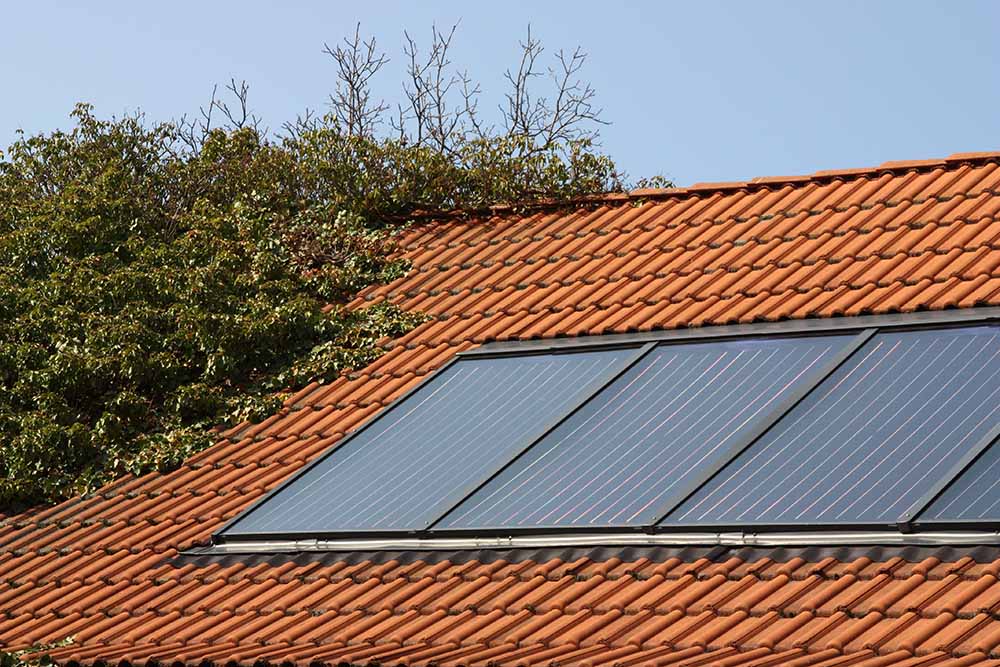
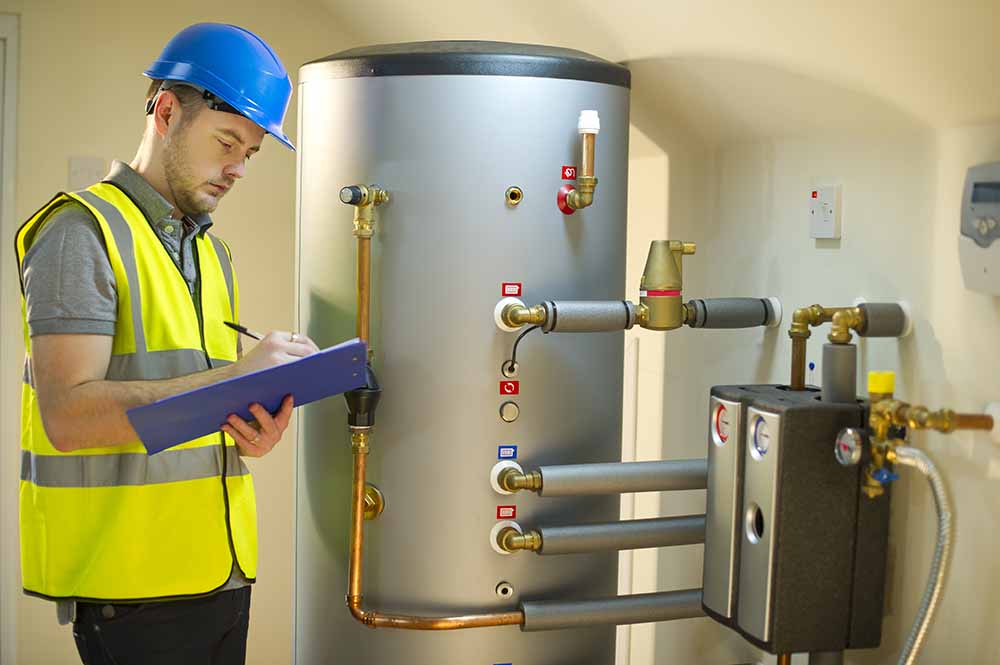
A solar water heating system consists of three major components:
1. One or more solar collectors (tubes or panels, usually roof mounted),
2. A pump managed by a controller unit,
3. A hot water cylinder with two heating coils (a twin-coil cylinder), or other multiple inputs.
When the fluid in the collector is hotter than the water in the cylinder, the controller turns on the pump to circulate fluid to the coil and heat the cylinder. The cylinder needs more than one coil or input to allow top-up heating in winter or bad weather.
The top-up can be from a conventional boiler or from a renewable energy option such as a biomass boiler or heat pump.
In England solar water heating is also supported by the Government’s new Green Homes Grant. You can apply for this grant first, and then also apply for and claim back RHI payments.
However, bear in mind that the grant value will be deducted from any RHI payments, this will entitle you to up to £5000 towards the costs of the installation making the solar hot water system an excellent way to save money on your bills and reduce your carbon footprint.
There are schemes available to help fund the cost of the installation like the RHI (renewable heat incentive) or the Green Home Grant Scheme details for both can be found on our grants and incentives page
